Berries & kiwi · 2027 season
Chippewa Blueberry Bush
Vaccinium
Better with a partnerSweet, light-blue berries on a compact plant. Works in containers and small beds.
- #3 container
Pick up in Pittsgrove, NJ, typically in March. Pay cash, check, Venmo or PayPal at pickup.
Chippewa is a half-high blueberry, a cross between highbush and low wild blueberries. It stays compact, so it's perfect for containers, small beds or a low hedge.
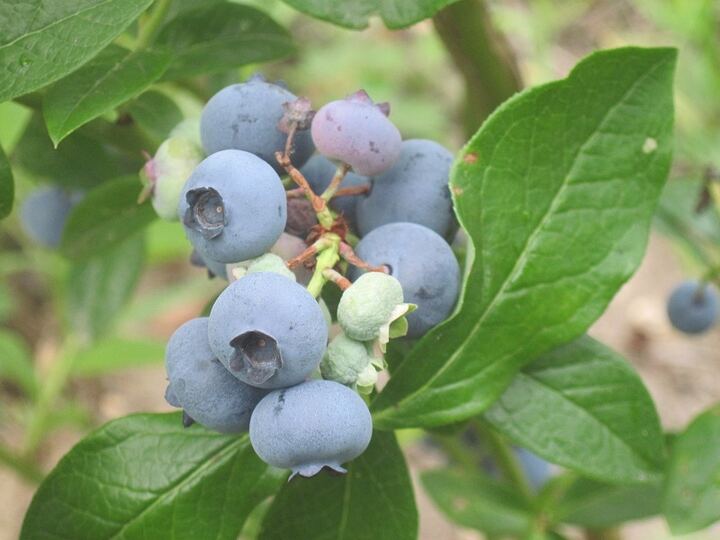
The berries are medium-large, sweet and light blue.
It comes in a 3-gallon pot, so it's well established.
Chippewa was released by the University of Minnesota in 1996 and is their most productive half-high variety, at 3–8 pounds of berries per bush.
How it tastes
Sweet, with light sky-blue berries. Nice for fresh eating and baking.
At a glance
- You get
- #3 container
- Hardiness zones
- USDA 3–7 (Salem County is 7)
- Blooms
- Mid season
- Ripens
- Mid July
- Starts bearing
- Often a small crop the first or second year
- Mature size
- About 3 ft tall and 3–5 ft wide; compact
- Pollination
- Better with a partner
- Botanical name
- Vaccinium
- Price
- $27 each, paid at pickup
- Pickup
- Pittsgrove, NJ, typically in March
The fruit
- Looks
- Medium-large, light sky-blue, firm
- Flavor
- Sweet
- Best for
- Fresh, Baking
- Keeps
- About 1–2 weeks in the fridge
Pollination
Partly self-fertile. Planting two or more different blueberry varieties near each other gives noticeably bigger crops and berries.
Good partners from our list
Growing tips
Watch for: Bred for the North; how it handles South Jersey's summer heat isn't well documented, so give it some afternoon shade and steady water
- Blueberries need acidic soil (pH 4.5–5.5). Much of South Jersey is naturally acidic, which is why blueberries do so well here. Test your soil if you're not sure.
- Blueberries are the exception to our native-soil rule: mix peat moss or pine bark into the planting area, and mulch with pine needles or wood chips.
- Plant two or more varieties for bigger crops.
- Keep the soil evenly moist. Blueberry roots are shallow.
- Remove the flowers for the first year so the plant puts its energy into roots.
New to planting fruit trees? Read our step-by-step planting guide: square hole, graft above the soil, native soil, and no fruit for the first two years.
Photos show the variety, not the exact plant you’ll get. Reservations are for the 2027 season, picked up at our farm in Pittsgrove, NJ, typically in March, and aren’t guaranteed until we confirm them. Questions? Ask us or call or text (856) 345‑4538.