Berries & kiwi · 2027 season
Issai Hardy Kiwi Vine
Actinidia arguta
Self-fertileGrape-sized, sweet kiwi you eat whole, smooth skin and all. Self-fertile.
- #1 container
Pick up in Pittsgrove, NJ, typically in March. Pay cash, check, Venmo or PayPal at pickup.
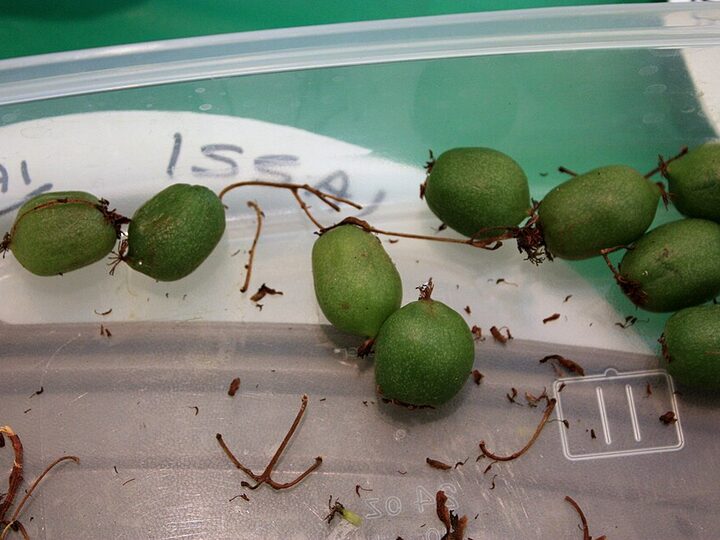
‘Issai’ is a hardy kiwi from Japan. Its fruit is the size of a large grape, with smooth green skin you eat along with the rest of it. No peeling, no fuzz. It tastes like a sweeter, more intense regular kiwi.
Issai is the go-to hardy kiwi for a small space. Most hardy kiwis need a separate male and female vine, but Issai fruits on its own. It's also less vigorous than other hardy kiwis and starts bearing young.
A word of honesty: Penn State reports that Issai hasn't performed as well in Pennsylvania as other hardy kiwis, and its fruit in a cluster ripens unevenly, so you'll pick over several passes. Plant it away from low frost pockets, because early spring shoots are easily killed by a late frost. Without a male vine nearby, the fruit is often seedless or nearly so.
How it tastes
Sweet and tropical, like a concentrated kiwi. You eat it whole, smooth skin and all, like a grape.
At a glance
- You get
- #1 container
- Hardiness zones
- USDA 5–8 (Salem County is 7)
- Blooms
- Late spring; small white flowers
- Ripens
- Early fall (September)
- Starts bearing
- Often 2–4 years after planting; Issai is one of the earliest hardy kiwis to bear
- Mature size
- Vine; trains to about 8–10 ft along a trellis
- Pollination
- Self-fertile
- Botanical name
- Actinidia arguta
- Price
- $13 each, paid at pickup
- Pickup
- Pittsgrove, NJ, typically in March
The fruit
- Looks
- Grape-sized to about 1½ inches, smooth green edible skin, no fuzz
- Flavor
- Sweet, like a concentrated kiwi
- Best for
- Fresh, eaten whole, Snacking
- Keeps
- About a week or two in the fridge
Pollination
Self-fertile, so one vine will fruit on its own. Planting a male hardy kiwi nearby gives bigger crops and larger fruit, but isn't required.
Growing tips
Watch for: Late spring frost on new shoots; spider mites in hot, dry weather; Japanese beetles
- Plant against a strong trellis, arbor or pergola. Hardy kiwi vines get heavy.
- Full sun to light shade. Protect new spring growth from late frost.
- Prune in winter and again in summer to keep the vine in bounds.
- Pick in early fall when the fruit softens, or pick firm and ripen indoors.
New to planting fruit trees? Read our step-by-step planting guide: square hole, graft above the soil, native soil, and no fruit for the first two years.
Photos show the variety, not the exact plant you’ll get. Reservations are for the 2027 season, picked up at our farm in Pittsgrove, NJ, typically in March, and aren’t guaranteed until we confirm them. Questions? Ask us or call or text (856) 345‑4538.