Flowering crabapples · 2027 season
Prairifire Flowering Crabapple Tree
Malus
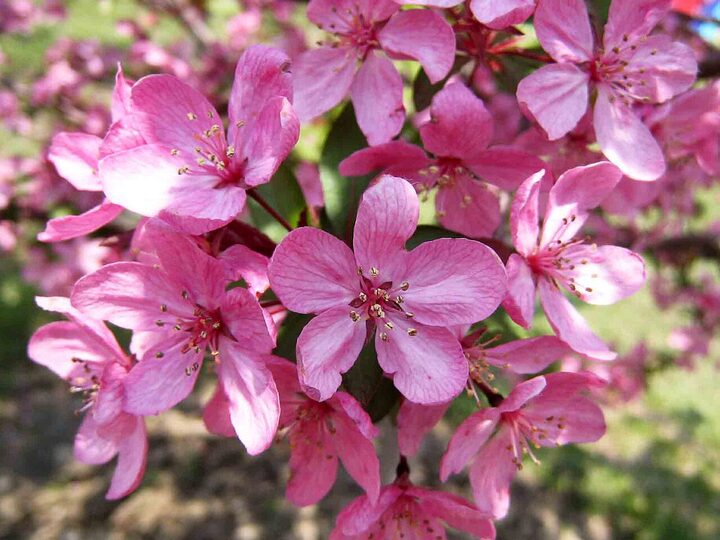
Pollinates applesDeep pink-red flowers and small red fruit for the birds (sour, not for eating). Pollinates apples.
- #7 container
- About 1.25" caliper
Pick up in Pittsgrove, NJ, typically in March. Pay cash, check, Venmo or PayPal at pickup.
‘Prairifire’ is one of the most popular flowering crabapples, for good reason. It covers itself in deep pink-red blossoms in spring, new leaves come in reddish-purple, and it's very disease-resistant.
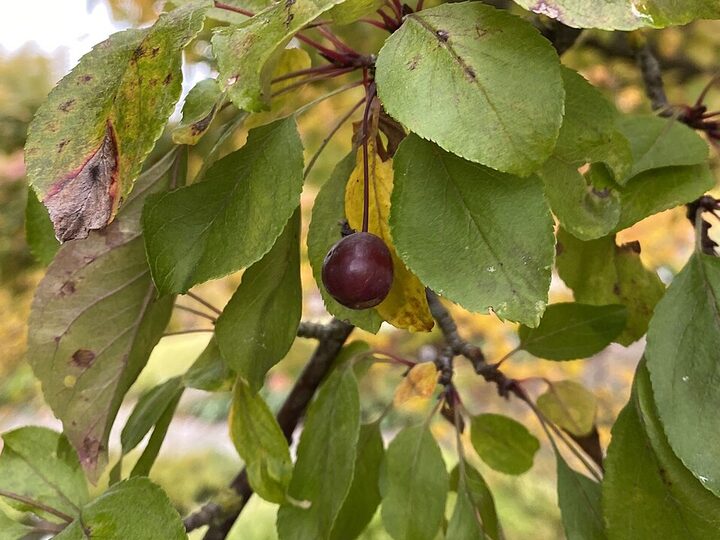
Its small, dark red fruit hangs on into winter and is a favorite of birds.
It's also a reliable pollinator for apple trees.
Crimson buds open bright pinkish-red. The fruit doesn't drop messily, and the reddish bark adds winter interest.
The fruit
Not grown for eating: the tiny fruit is sour and astringent. Birds love it, though.
At a glance
- You get
- #7 container, about 1.25" caliper (trunk thickness 6 inches above the soil; each tree varies a little)
- Hardiness zones
- USDA 4–8 (Salem County is 7)
- Blooms
- Mid to late spring
- Ripens
- Flowers in spring; fruit colors in fall
- Starts bearing
- Flowers the first spring or two
- Mature size
- About 15–20 ft tall and wide
- Pollination
- Pollinates apples
- Botanical name
- Malus
- Price
- $102 each, paid at pickup
- Pickup
- Pittsgrove, NJ, typically in March
Flowers & fruit
- Looks
- Dark red, ⅜–½ inch, hangs on for months
- Flavor
- Not an eating crabapple
- Best for
- Spring flowers, Food for birds, Pollinating apples
Pollination
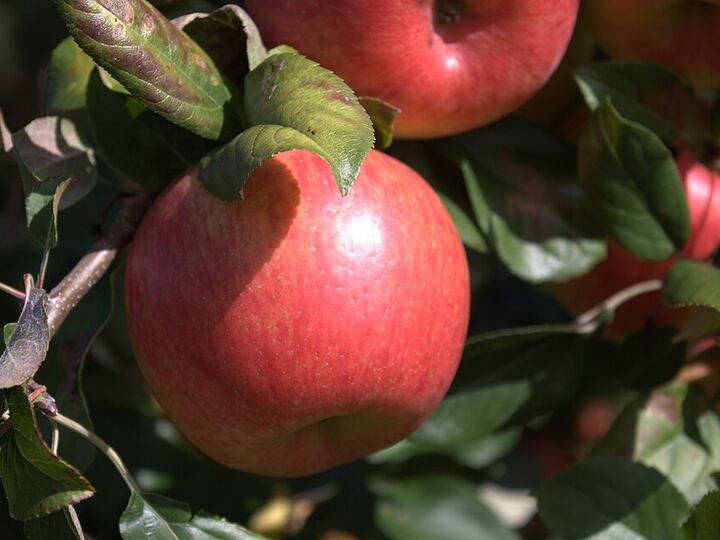
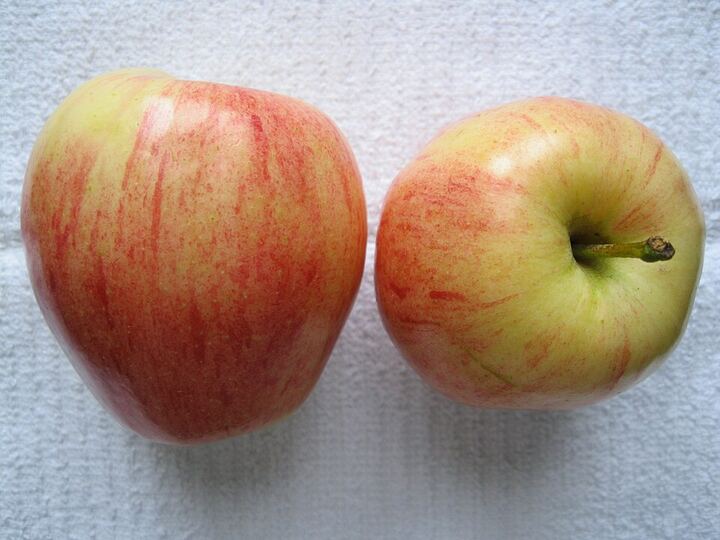
Grown for flowers, so it doesn't need a partner. It's an excellent pollinator for apple trees blooming at the same time.
Apples it pairs well with
Growing tips
Watch for: Good resistance to scab, rust, mildew and fire blight; resists Japanese beetles
- Full sun gives the best flowers and the most fruit.
- Very low maintenance. Prune only to shape, right after it blooms.
- Doubles as a pollinator: plant within about 50 feet of your apple trees.
New to planting fruit trees? Read our step-by-step planting guide: square hole, graft above the soil, native soil, and no fruit for the first two years.
Photos show the variety, not the exact plant you’ll get. Reservations are for the 2027 season, picked up at our farm in Pittsgrove, NJ, typically in March, and aren’t guaranteed until we confirm them. Questions? Ask us or call or text (856) 345‑4538.