Figs · 2027 season
Brown Turkey Fig Tree
Ficus carica
Self-fertileDependable, fairly hardy fig with sweet, mild, pink-fleshed fruit.
- #3 container
Pick up in Pittsgrove, NJ, typically in March. Pay cash, check, Venmo or PayPal at pickup.
Brown Turkey is one of the most widely grown figs in America, known for being dependable and productive.
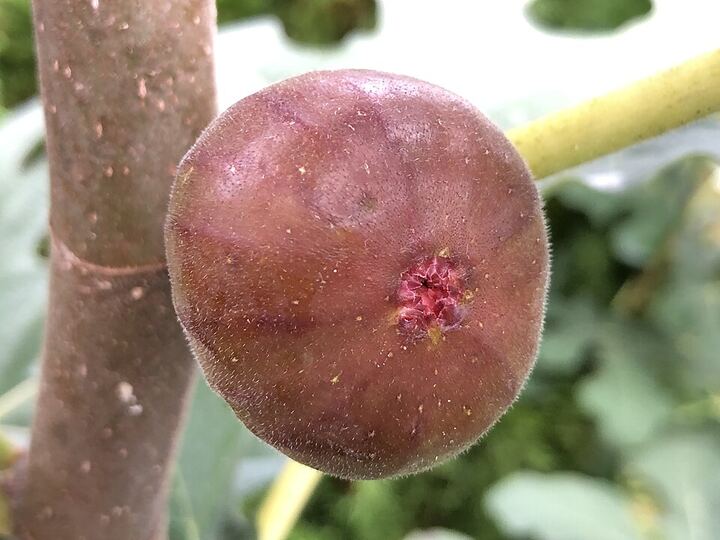
The figs are medium to large, with brownish-purple skin and sweet, mild, pinkish flesh. Eat them fresh, bake with them or make jam.
It's fairly cold-hardy for a fig. In Salem County, plant it in a sheltered, sunny spot and mulch the roots deeply in late fall. If a hard winter kills the top, it usually regrows from the roots.
It also grows well in a large pot that you move into a garage or shed for the winter.
How it tastes
Sweet and mild, with soft, pinkish-amber flesh.
At a glance
- You get
- #3 container
- Hardiness zones
- USDA 7–10; zone 6 with winter protection (Salem County is 7)
- Blooms
- Flowers are hidden inside the fig
- Ripens
- Mid-August until frost, sometimes with a small early crop in early summer
- Starts bearing
- Often the first or second year
- Mature size
- About 10–20 ft where it never freezes back; usually a large shrub here
- Pollination
- Self-fertile
- Botanical name
- Ficus carica
- Price
- $28 each, paid at pickup
- Pickup
- Pittsgrove, NJ, typically in March
The fruit
- Looks
- Medium to large, coppery brown to purple skin, pinkish flesh
- Flavor
- Sweet and mild
- Best for
- Fresh, Baking, Jam
- Keeps
- Only a few days; eat or preserve quickly
Pollination
Self-fertile. Common figs like Brown Turkey need no pollinator at all.
Growing tips
Watch for: Few disease problems; the main risk is winter dieback in a hard winter
- Plant in the sunniest, most sheltered spot you have. A south-facing wall is ideal.
- Mulch the roots heavily in late fall. If a hard winter kills the top, it regrows from the roots and still fruits that year.
- Water regularly while fruit is forming.
- Pick when the figs soften and droop on the stem. They don't ripen further once picked.
New to planting fruit trees? Read our step-by-step planting guide: square hole, graft above the soil, native soil, and no fruit for the first two years.
Photos show the variety, not the exact plant you’ll get. Reservations are for the 2027 season, picked up at our farm in Pittsgrove, NJ, typically in March, and aren’t guaranteed until we confirm them. Questions? Ask us or call or text (856) 345‑4538.