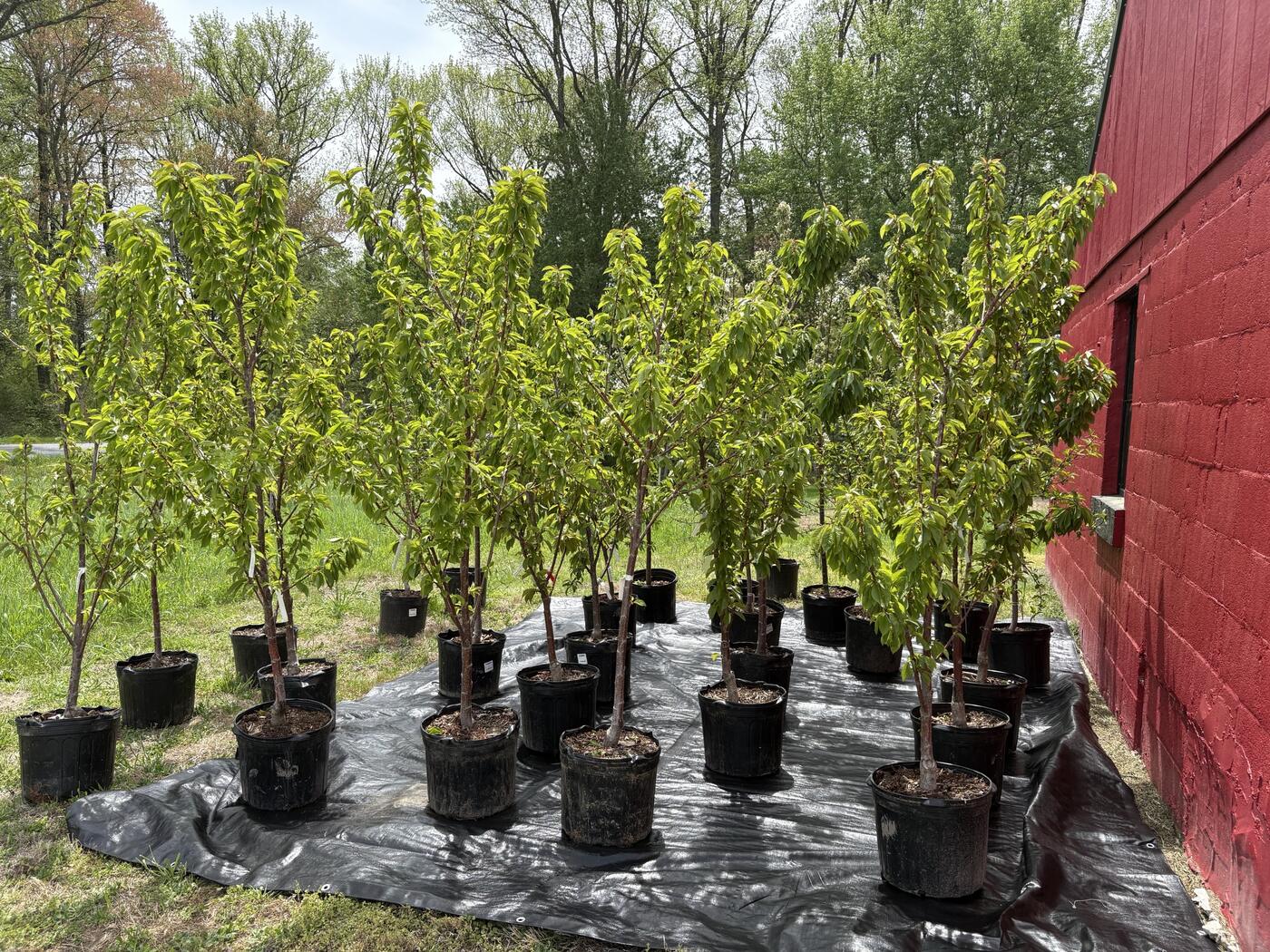
Sweet cherries for fresh eating and tart cherries for pies, preserves and juice. Standard and semi-dwarf options. For spraying, see the Rutgers cherry spray schedule.
Our trees
Fruit trees, chosen for South Jersey soil
We’re a small, family-owned farm and nursery on 7 acres in Salem County, New Jersey, and we live here. We grow fruit trees of our own, and we also sell trees grown by a supplier nursery we trust. Those supplier trees make up our 2027 reservation list.
2027 season
Now taking orders for 2027
Reservations are open for spring 2027. A few things to know:
- They sell out fast Supply is limited, and the most popular varieties usually go early.
- Usually filled in March We fill all orders at once, typically in March, and contact you to set up a pickup time at our farm in Pittsgrove.
- Not guaranteed A reservation holds your place, but it isn’t a guarantee. If something isn’t available, we’ll tell you, and you won’t pay for it.
- Sourced from a supplier The trees on the reservation list come from another nursery, not from our own rows. We sell them, and you pick them up here.
Varieties
Trees we carry
These are the kinds of trees we sell. For the exact 2027 varieties, with photos and prices, see Reserve 2027 trees. You can reserve there and pay at pickup.
Heritage and modern varieties on a range of rootstocks, from backyard semi-dwarf to full-size trees. For spraying, see the Rutgers apple spray schedule.
Fuyu Asian persimmon this year: sweet, crisp fruit, beautiful in the fall, and not planted nearly enough around here. Give it a sheltered, sunny spot.
Freestone and clingstone varieties suited to Mid-Atlantic heat, humidity and late frosts. For spraying, see the Rutgers peach and nectarine spray schedule.
European pears for eating and canning, plus Asian pears. We look for fire-blight tolerance.
European, Japanese and hybrid plums for fresh eating, drying and preserves. For spraying, see the Rutgers plum spray schedule.
Late spring frosts make these a gamble in South Jersey, and we’ll tell you that up front. For nectarines, see the Rutgers peach and nectarine spray schedule.
Chicago Hardy figs, blueberries, raspberries, blackberries, hardy kiwi and grapes. Quick to bear and easy for beginners. For grapes, see the Rutgers grape pest control guide.
Pawpaw & natives
Pawpaw and other native fruit trees for edible landscapes, riparian buffers and wildlife plantings.
Quince & medlar
Quince, medlar and other less common trees. If you’re looking for something specific, ask.
Wildlife plantings
Mast and soft-fruit trees for food plots and habitat projects, picked with hunters in mind.
Looking for something else?
We can often source a specific variety if you give us the lead time.
Ask usBefore you plant
Three things worth getting right
For the full method, step by step with pictures, see our planting guide.
Pollination
Many fruit trees won’t produce fruit on their own. See our pollination guide for which trees need a partner, or tell us what’s already planted nearby and we’ll help you pick one.
Rootstock & spacing
Rootstock determines how big the tree gets, how soon it fruits and how much ladder work you’ll be doing. It’s worth getting right.
Site and drainage
South Jersey soil can go from sand to heavy clay within a mile. Wet ground in early spring is one of the most common things that kills young trees.
Grown here
Trees we grow ourselves
We love fruit trees. We grow our own here on our 7-acre farm, where we live, for our own family, and keep a small family orchard. The trees on our 2027 reservation list are not from our own rows. They come from our supplier nursery.
The family orchard isn’t open to the public, and for now the fruit is just for us. If that changes, we’ll post it here.
Why it matters to you
Growing fruit trees for our own family has taught us things a catalog can’t: which varieties do well here, how to plant them, and how to keep them healthy. That’s what we share when we help you choose and plant. Start with our planting guide.
Ready to order?
Reserve from what we have in stock today and pay at pickup. For larger orders, send us the species, how many you need and when, and we’ll give you a price.